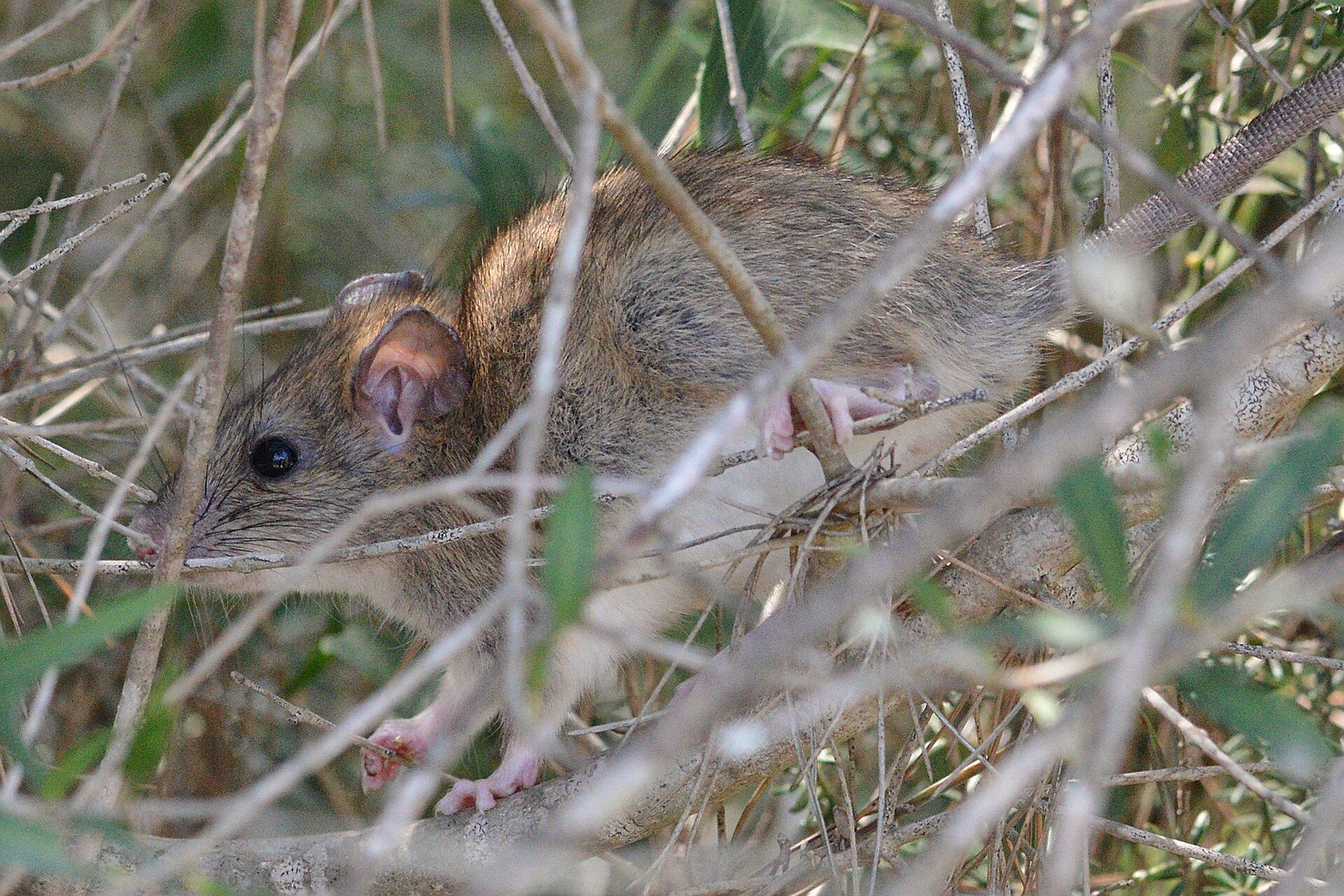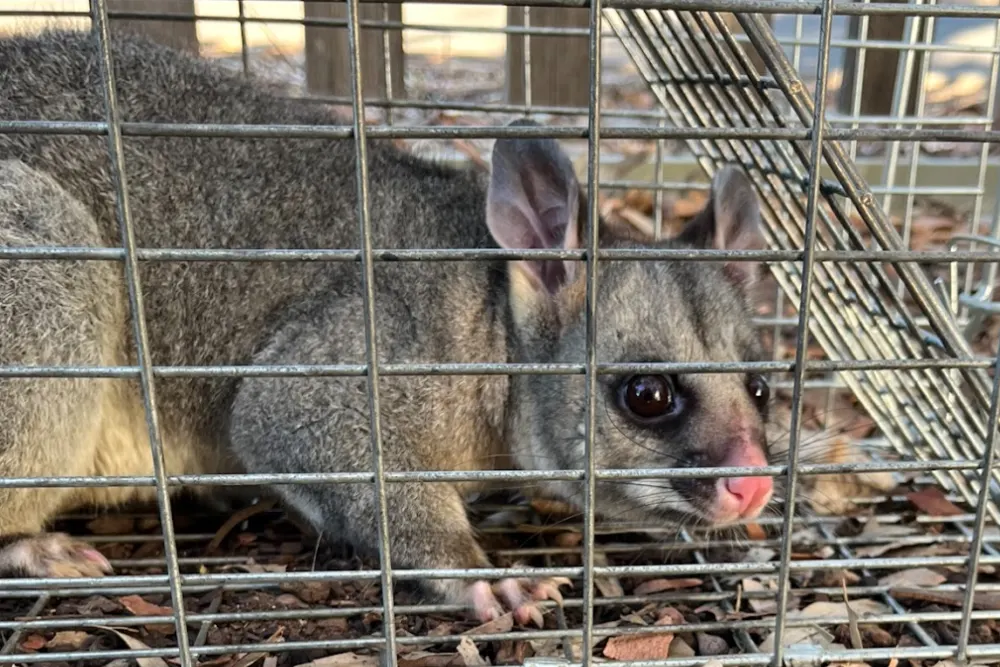
The question everybody asks first is how long they have to put up with it. The honest answer depends on the size of the animal, where it died and how hot your roof gets — but the range is wide enough to matter: about one to two weeks for a rat, three to six weeks or more for a possum.
That is the passive timeline. It assumes you do nothing and wait for the carcass to dry out. What follows is what actually happens over those weeks, why the middle of that period is the worst, and what removal involves.
The decomposition timeline
Day 1 to 2: first detection
The earliest odour is faint and sweetish, and people often mistake it for a drain or something left in a bin. It is usually noticed in one room, typically the one directly below the carcass, and often at night when the house is closed up.
This is the cheapest point to deal with it. The carcass is intact, fluids have not yet soaked into building materials, and removal is straightforward.
Day 3 to 5: bloat and flies
Bacterial activity produces gas. The animal bloats, and the odour compounds — the ones responsible for that unmistakable smell of death — are released in volume.
This is also when blowflies arrive. They find a carcass with remarkable speed and lay eggs in it, and within a couple of days you start seeing adult flies at windows and around light fittings inside the house. A sudden cluster of blowflies in one room is one of the most reliable indicators of a carcass in the cavity above.
Day 4 to 7: peak odour
The smell reaches its worst here. Gases saturate insulation batts, timber and plasterboard, and begin travelling through wall cavities and ducting into other rooms. Households that have been coping start calling.
Two things make this stage worse than people expect. First, porous materials absorb the odour and become a secondary source — so removing the carcass on day ten does not instantly clear the smell. Second, decomposition fluids begin soaking through the ceiling, which is where the staining starts.
Week 2: fluids and larvae
Soft tissue breaks down. Fluid marks appear on the ceiling as spreading brown rings, and if the carcass sits directly on plasterboard the sheet may need replacing. Maggots reach maturity and disperse, which is when people report larvae dropping through downlights or ceiling vents.
Week 3 to 6: gradual decline
The remaining tissue dries. Odour falls away slowly rather than stopping, and in a cool cavity — a subfloor, a shaded wall void, a Melbourne or Canberra winter — it can persist well past six weeks.
What changes the timeline
Size of the animal. A mouse may pass almost unnoticed. A rat is a one-to-two week problem. A brushtail possum has fifteen to twenty times the body mass of a rat, and the timeline extends accordingly.
Temperature. This is the biggest variable. A tiled roof in a Brisbane or western Sydney summer can exceed 60°C in the afternoon, which accelerates early decomposition dramatically — the odour arrives faster and hits harder. Paradoxically the carcass then dries out faster too. A cool subfloor does the opposite: slower onset, much longer duration.
Airflow. A well-ventilated roof cavity disperses gas outward. A sealed cavity pushes it down through ceiling penetrations — downlights, exhaust fans, manholes — into your living space.
Location. A carcass in the open roof cavity is accessible and dries relatively quickly. One inside a wall void, in ducting, or under a subfloor stays damp and stays smelly.
Humidity. Damp conditions prolong the process; dry heat shortens it.
Why the smell moves around the house
People frequently tell us the smell is strongest in a room that turns out to be nowhere near the animal. That is normal, and it is why probing walls based on where the smell is worst wastes time and damages plaster.
Odour follows air movement. It travels along wall cavities, over the top plate, through ducting and into whichever room has the lowest pressure — often the one with an extraction fan running or a door closed. In two-storey houses it commonly presents downstairs when the carcass is in the upper roof.
Proper location work uses cavity inspection, systematic elimination and probe or thermal tools where needed, rather than opening the wall nearest the smell.
The health considerations
A carcass in a ceiling is not a medical emergency for most healthy adults, but it is not neutral either.
- Blowflies and larvae move between the carcass and your kitchen surfaces.
- Bacteria in decomposition fluid contaminate any material they soak into.
- Secondary pests — carpet beetles, flesh flies, ants — arrive to feed and stay afterwards.
- Air quality in a closed house with a saturated ceiling cavity is genuinely unpleasant and can trigger headaches and nausea.
For households with infants, elderly residents or anyone immunocompromised, it is worth treating as urgent rather than tolerable.
What removal actually involves
Locating the source. Cavity inspection first, then narrowing by systematic elimination, with probe or thermal assistance where the void is inaccessible. The aim is to open the smallest possible access in the least visible place.
Extraction under biohazard protocol. Full PPE, sealed containment, correct disposal. This is not a task where a bin bag and a pair of gloves is adequate — the fluids are the problem, not the animal.
Disinfection. Commercial-grade disinfectant on the affected substrate. Contaminated insulation is usually removed rather than treated, because batts hold fluid and odour indefinitely.
Odour neutralisation. A neutralising agent that binds the odour compounds, rather than a fragrance that covers them. Where the odour has saturated a large area, this may involve fogging the cavity.
Fly treatment. If larvae have dispersed, the surrounding area is treated so you are not dealing with adult flies for the following fortnight.
Sealing the entry point. The animal got in somehow. If that opening stays open, you will be doing this again — and the second carcass will be in the same cavity as the first one's residue.
Should you wait it out?
Occasionally waiting is defensible: a mouse, in a well-ventilated cavity, in mild weather, where the smell is faint and nobody is sleeping under it.
For anything larger it usually costs more. The comparison is not "removal cost versus zero" — it is removal now versus removal later plus replacing saturated insulation, plus possibly replacing a stained ceiling sheet, plus a fortnight of flies, plus whatever the smell does to a house you are trying to live in, rent out or sell.
The odour is also the least reliable guide to severity. A small animal in a bad spot can smell worse than a large one in a ventilated cavity. What matters is where it is and what the fluids are soaking into — and that is what an inspection is for.
What the smell does to building materials
The odour is the symptom people react to. The damage is what costs money.
Insulation. Batts are the worst affected material in most jobs. Fibreglass and polyester hold decomposition fluid and the associated odour compounds indefinitely, and no amount of surface treatment recovers them. Contaminated batts are removed and replaced — usually a small area, but it has to be done or the smell simply continues from the insulation instead of the carcass.
Plasterboard. Fluid soaking into the top face of a ceiling sheet produces the brown ring people notice from below. If the sheet is saturated it is replaced; if it is only stained it can be sealed with a stain-blocking primer and repainted. Painting over an unsealed stain is a waste of an afternoon — it bleeds back through.
Timber. Joists and battens absorb odour but tolerate treatment well. Cleaning and a neutralising application is normally sufficient.
Ducting. If a carcass dies in or near ducting, the system distributes the odour through the house every time it runs. Ducting is cleaned, and in bad cases sections are replaced.
Masonry and brick cavities. Porous, and slow to release absorbed odour. These are the jobs where fogging the cavity earns its place.
The specific case of a possum
A possum carcass is a different order of problem from a rat, for three reasons.
Mass. Fifteen to twenty times a rat's body weight means fifteen to twenty times the fluid, and a proportionally longer timeline. Six weeks is common; in a cool cavity it runs longer.
Location. Possums die in the places they den — deep in roof cavities, on top of ceiling insulation, inside wall voids they have squeezed into, and occasionally in chimneys. Those are harder to reach than the open runs where rats die.
Cause. A possum that dies inside a building has usually been sealed in, which means the owner attempted a DIY exclusion and got the timing wrong. The most common version of this is a mother sealed out while dependent young remained in the roof. That is both the saddest version of this job and the most avoidable one.
How location work actually proceeds
People imagine a technician sniffing along a wall. In practice it is systematic.
1. Interview. When did the noise stop? Where was it loudest before it stopped? What has changed since — new sealing, recent baiting, a storm?
2. Cavity inspection. Roof space first, because it is accessible and it is where most carcasses are. A visual sweep with a torch resolves a large share of jobs immediately.
3. Fly mapping. Blowfly concentration is a directional signal. Where flies emerge tells you which cavity, and often which bay between joists.
4. Elimination. Cavities are worked systematically rather than by guesswork, narrowing to a section.
5. Probe or thermal. For inaccessible voids, tools narrow the position to a specific bay before anything is cut.
6. Minimal access. If cutting is required, it goes in the least visible defensible location — inside a wardrobe, above a cornice line, in a cupboard back — and it is made good afterwards.
The rule we work to is that no wall gets opened on a guess.
Prevention: why sealing is part of the job
Every carcass entered the building somehow. If the entry stays open, the same cavity receives the next animal — and the residue from the first one is still there.
Sealing after a dead animal job usually addresses the same list as a live exclusion: gutter-line gaps under tiles, broken eave sheeting, gaps behind fascia, unscreened vents, weep holes, and service penetrations. In a rodent case, it means proofing to 6mm rather than 20mm if mice are involved.
If baiting has been done recently, expect a conversation about placement. Bait stations positioned so that poisoned rodents die in accessible areas rather than deep in cavities substantially reduce the chance of a repeat odour job.
What to do while you are waiting for the technician
- Ventilate. Open windows in the affected rooms and run exhaust fans. It does not fix anything but it makes the house liveable.
- Seal ceiling penetrations temporarily. Tape over the manhole edge if the odour is coming down through it.
- Do not spray perfumed products into the cavity. They combine with the odour rather than replacing it, and the result is worse.
- Do not open the wall yourself. Wait for the location work; a hole in the wrong place is a repair job on top of everything else.
- Keep food covered. Blowflies move between the carcass and your kitchen.
- Photograph any staining. With a date. If you later make an insurance claim or a strata request, that photograph is your evidence.
When it is genuinely urgent
Treat it as same-day if any of the following apply: larvae are dropping into a living space, a ceiling is visibly wet or sagging, there is an infant or an immunocompromised person in the house, or the property is a food business. In those cases the calculus is not about odour tolerance — it is about contamination and, in a commercial setting, a closure risk.
Want it handled instead?
A licensed technician is on site within 60 minutes across Sydney, Brisbane, Canberra and Melbourne. Free inspection, fixed price, booking confirmed within 10 minutes.