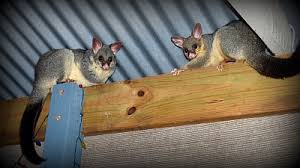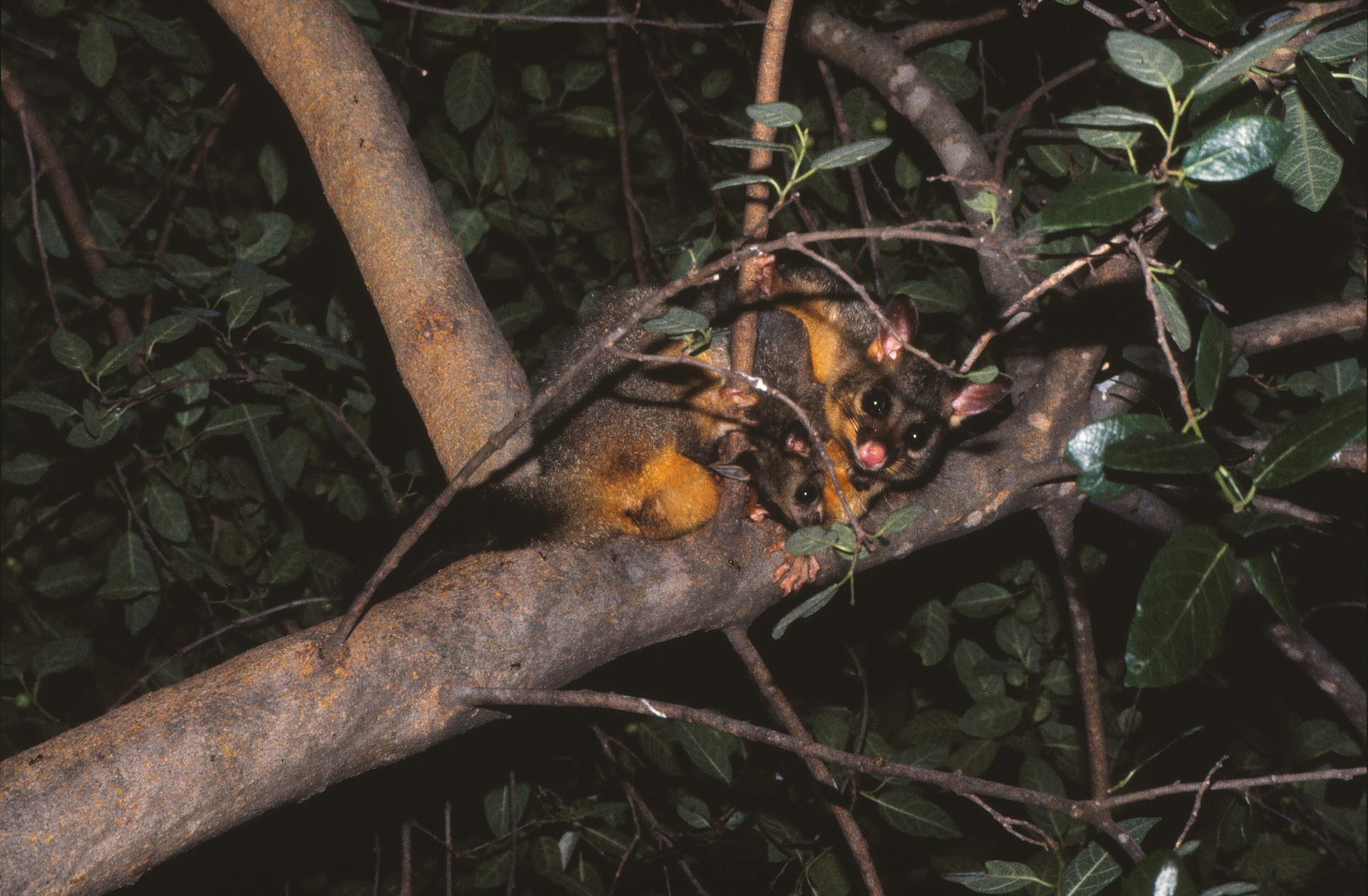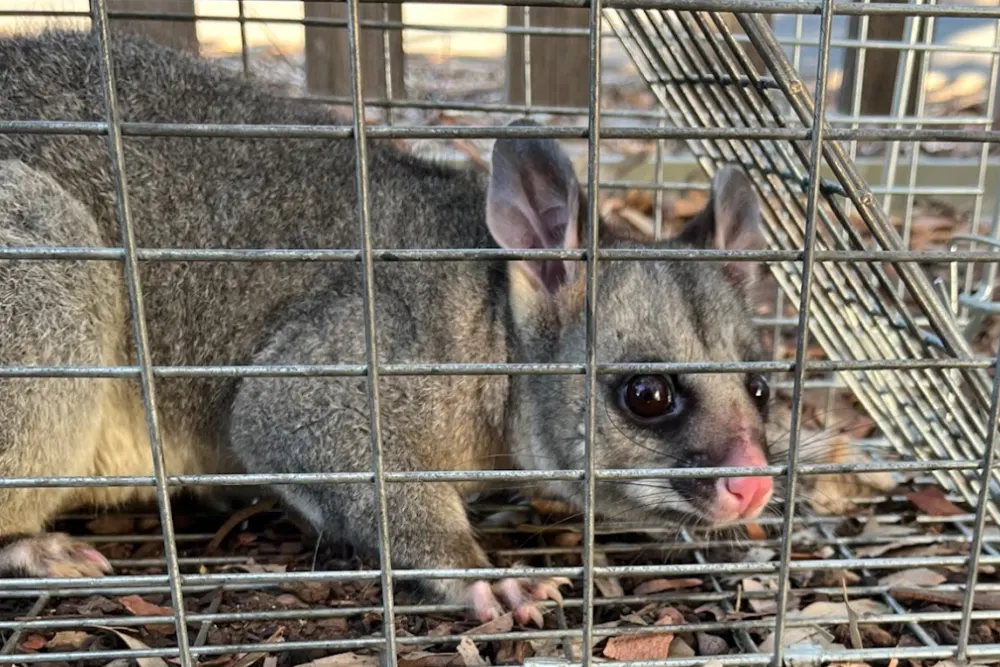
There is one question that changes a possum job more than any other: is she alone up there?
If there are dependent young in the cavity, everything about the timing changes. The exclusion that would otherwise be finished this week has to be staged over a longer period, and any attempt to shortcut it produces the worst possible outcome — dead joeys in a ceiling, and a distressed mother tearing at the roof line trying to reach them.
This is what to look for, why the delay is necessary, and what should happen instead.
How to tell whether there are young up there
You will rarely see them. The evidence is acoustic and circumstantial.
Two sets of sounds at different weights. The adult's movement is heavy and deliberate. Alongside it you may hear something much lighter, often confined to one area of the ceiling rather than travelling.
Chirping, squeaking or clicking. Distinct from the adult's guttural hissing. Young brushtails make a repetitive clicking or squeaking call, most often heard shortly after the mother leaves at dusk and again when she returns.
One heavily used spot. A mother with young dens in a single location rather than moving around the cavity. That shows as concentrated droppings, flattened insulation in one area, and noise that always originates from the same point above the same room.
Sighting. A female with a joey on her back is unambiguous. A visibly distended pouch on an animal seen leaving at dusk is close to it.
Season. Brushtails and ringtails breed across a broad window rather than one narrow month, and in urban areas with reliable food many produce young twice a year. Season narrows the odds; it never settles the question. This is why the check is physical rather than calendar-based.
An inspection with a scope and a light through the manhole answers it directly in most roofs. Where the den is behind a hip or over a cathedral ceiling, a camera left overnight at the entry point resolves it in a night.
Why a one-way door is the wrong move right now
A one-way door works because the possum leaves at dusk under its own power. That logic depends on the animal being able to leave.
A pouch joey cannot. A back-riding joey may not be strong enough to follow the whole route out. A recently weaned young possum denning with its mother might manage it, or might not.
Fit the door and the mother goes out at dusk as she always does. The young stay. She comes back before dawn to a sealed building and cannot reach them.
What happens if young are separated
It is worth being direct about this, because it is the reason the industry treats the check as mandatory.
The young die in the cavity, typically over several days. Then you have a decomposing carcass in an inaccessible part of the roof, which brings the odour, the blowflies and often a wall or ceiling opening to retrieve it. A possum job becomes a dead animal removal job.
Meanwhile the mother does considerable damage trying to get back in. Possums are strong and highly motivated in this situation. Sealed points get torn at, tiles get lifted, and mesh that would hold against ordinary pressure gets worked loose.
The distress is real and the outcome is avoidable. It is also, in most jurisdictions, exactly the sort of harm the protection legislation exists to prevent.
What we do instead
The job gets staged.
Stage one — inspect and confirm. Find every entry point on the building and establish whether young are present and roughly what stage they are at.
Stage two — seal everything except the active entry. All secondary openings are permanently closed in steel mesh and metal. This narrows the family to one route in and out, stops other animals joining, and means most of the work is already done when the exclusion can proceed.
Stage three — leave the active point open. The mother continues to come and go normally. Nothing about her access changes.
Stage four — install a nest box now, not later. Mounted on a nearby tree before the exclusion, it gives the family somewhere to relocate to and is often used voluntarily before the door ever goes on.
Stage five — return when the young are mobile. The one-way door is fitted, monitored, and removed, and the final opening is sealed.
If the noise is unbearable in the meantime, there are things that genuinely help: keeping the area below the den quiet, avoiding attic access at dusk and dawn, and dealing with the food and access attractions on the property — securing bins, picking up fallen fruit, and trimming branches within a couple of metres of the roof line.
The timeline you should expect
A brushtail joey is in the pouch for roughly four to five months, then rides on the mother's back and dens with her for several weeks more before becoming independent. Ringtails are similar in length, and commonly have twins.
What that means for you depends entirely on the stage at inspection. A joey close to independence may mean a fortnight's delay. One recently born means a considerably longer wait, and the correct approach then is to complete all the sealing work, keep the situation stable, and book the return.
Any operator who quotes a fixed exclusion date without having looked in the cavity is guessing at the one variable that matters.
If you find a possum on the ground
Occasionally a joey comes down — dislodged during a fall, or separated from a mother that was hit by a car or taken by a dog.
- Do not attempt to feed it. Cow's milk is harmful to marsupials and the wrong formula does real damage.
- Keep it warm, dark and quiet. A towel-lined box in a warm, still room, away from pets and away from noise.
- Do not handle it more than necessary. Handling is stressful and stress kills orphaned marsupials.
- Call a wildlife rescue organisation the same day. In most areas WIRES or the equivalent state service will collect. Raising a joey requires a licensed carer, the right formula and species-appropriate technique.
- If the mother is nearby and the young is uninjured, leaving the area quiet and dark for an hour or two sometimes lets her retrieve it. Watch from a distance rather than intervening immediately.
What not to do
Do not block the entry point. This is the single most common and most costly mistake. If you have already done it, open it again now.
Do not trap. Trapping a lactating female separates her from young you have not found, with the same result as a badly timed door.
Do not smoke, gas or flush them out. Beyond being illegal, it drives animals deeper into cavities where they die out of reach.
Do not use poison. There is no legal or humane rodenticide approach to possums, and secondary poisoning kills owls, raptors and pets.
Do not go into the roof to look at close range. A cornered brushtail defends itself, and a mother with young defends herself vigorously. Bites and scratches from possums are a genuine infection risk.
Do not wait for it to sort itself out. Nothing resolves on its own. The den stays warm and dry, the family stays, and the damage accrues.
The cost of getting this wrong
Compare the two paths.
Done correctly: a staged exclusion, an extra visit some weeks later, permanent proofing, a nest box, and a possum family living outside the building.
Done wrong: dead joeys in the cavity, a decomposition odour through the house for weeks, a ceiling or wall opened to retrieve the carcasses, sanitisation and deodorising, insulation replacement, repairs to whatever the mother destroyed getting back in, and then the exclusion still to do.
The second path costs several times the first and takes months to finish.
Checklist
- Listen at dusk and again before dawn for a second, lighter set of sounds
- Listen for chirping, squeaking or clicking distinct from the adult
- Note whether noise always originates from the same spot
- Do not block or seal the active entry point
- Do not trap
- Book an inspection and say explicitly that you suspect young — it changes the visit
- Ask the operator how they check, and what their plan is if young are found
- Expect all secondary sealing to be completed now and the door to be staged later
- Ask for the nest box to go up at the first visit, not the last
The delay is inconvenient. It is also the difference between a wildlife job that ends properly and one that ends with a carcass in your ceiling.
Why the young are so hard to spot
People assume that if there were babies up there, they would know. Usually they do not, and the reasons are structural.
A pouch joey makes no independent noise at all for the first several weeks and does not move independently. From below, a mother with a young joey sounds exactly like a single possum.
Even once the joey is vocal, the sounds are quiet and easily lost. A clicking or squeaking call carries far less through plasterboard than an adult's guttural hissing, and it is most often made in the minutes after the mother leaves — precisely when a household assumes the roof has gone quiet for the night.
The den is also usually in the worst place to observe. Possums den at the perimeter of a roof cavity, over an eave, behind a hip, or in the void above a cathedral ceiling. Those positions are frequently out of sight from the manhole even with a good torch.
This is why an inspection uses a scope and a camera rather than a look and a listen, and why "we did not hear any" is not the same as "there are none".
What a staged job costs
A staged exclusion costs more than a single-visit one, for the straightforward reason that it is two visits.
The first visit carries most of the work: full inspection, confirmation of young, permanent sealing of every secondary opening, and the nest box installed.
The second visit is shorter: fit the one-way door, monitor, return to remove it and seal the last opening.
What drives the total is the same set of variables as any exclusion — the number of entry points, the roof type and pitch, access height, and whether insulation needs remediation. The presence of young adds a visit; it does not multiply the job.
Set against the alternative, it is inexpensive. A badly timed door produces dead joeys in the cavity, a decomposition odour through the house for weeks, an access cut to retrieve the carcasses, sanitisation, insulation replacement, repairs to what the mother destroyed getting back in — and the exclusion still to do afterwards. That path routinely costs several times the staged job and takes months to finish.
Questions to ask the operator
Before you book, ask these. The answers tell you quickly whether you are dealing with someone who does wildlife work properly.
- How do you check for dependent young? You want to hear about a scope, a camera or overnight monitoring — not a guess based on the month.
- What happens if you find young? The correct answer is: seal everything else, leave the active point open, install the nest box, and come back. Anyone who says they can proceed regardless has told you what you need to know.
- Is the return visit included in the price? Get this in writing before the first visit.
- What licence do you hold for this state? Possum work is licensed, and the conditions differ by state.
- What do you seal with? Steel mesh, metal flashing, profiled closures and mortar. If the answer is expanding foam, keep calling.
- Do you install a nest box, and when? It should go up at the first visit, not the last.
- What warranty covers the proofing? And what voids it.
The one thing to do tonight
If you have already blocked the entry point, open it again now. Not tomorrow.
If a mother has been shut out with young inside, the window to fix that without a death in the cavity is measured in hours to a couple of days. Everything else on this page can wait until morning. That cannot.
Want it handled instead?
A licensed technician is on site within 60 minutes across Sydney, Brisbane, Canberra and Melbourne. Free inspection, fixed price, booking confirmed within 10 minutes.