Every week somebody tells us they have a cage trap in the shed and asks whether they can just deal with the possum themselves. The short answer is no, and the reason is not bureaucratic. Possums are native animals with legal protection, and the rules that look inconvenient exist because DIY relocation kills most of the animals it moves.
This is a plain-language summary of where the law sits. It is general information rather than legal advice, and the state environment department is always the authoritative source — links are at the bottom of every page on this site.
The starting position: possums are protected
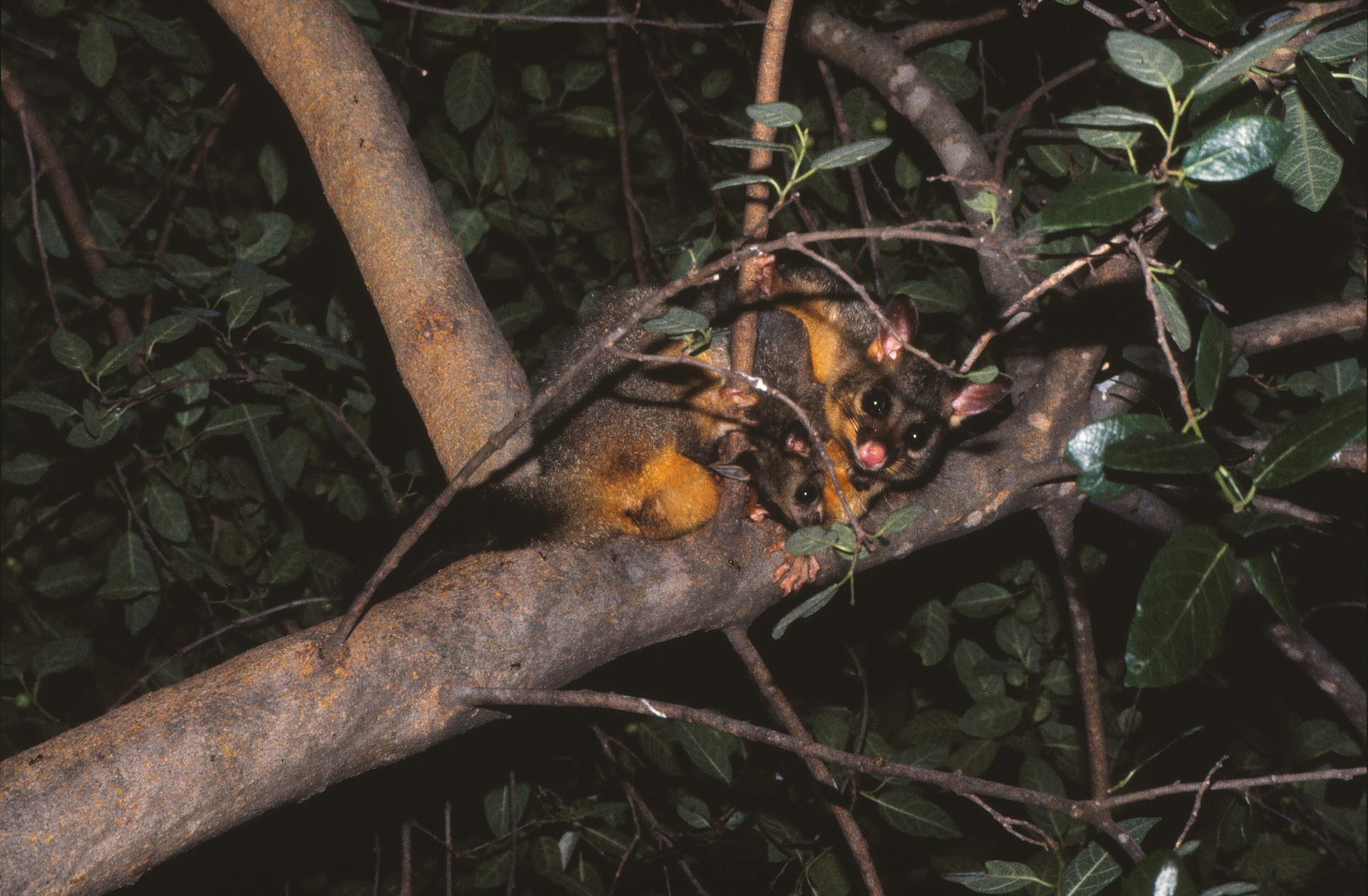
Australia's common brushtail possum and common ringtail possum are protected native fauna. That protection is not conditional on where the animal is. A possum in your ceiling has the same legal status as one in a national park.
Practically, protection means three things:
- You cannot harm or kill it. Poisoning, shooting or drowning a possum is an offence, and in most jurisdictions a serious one.
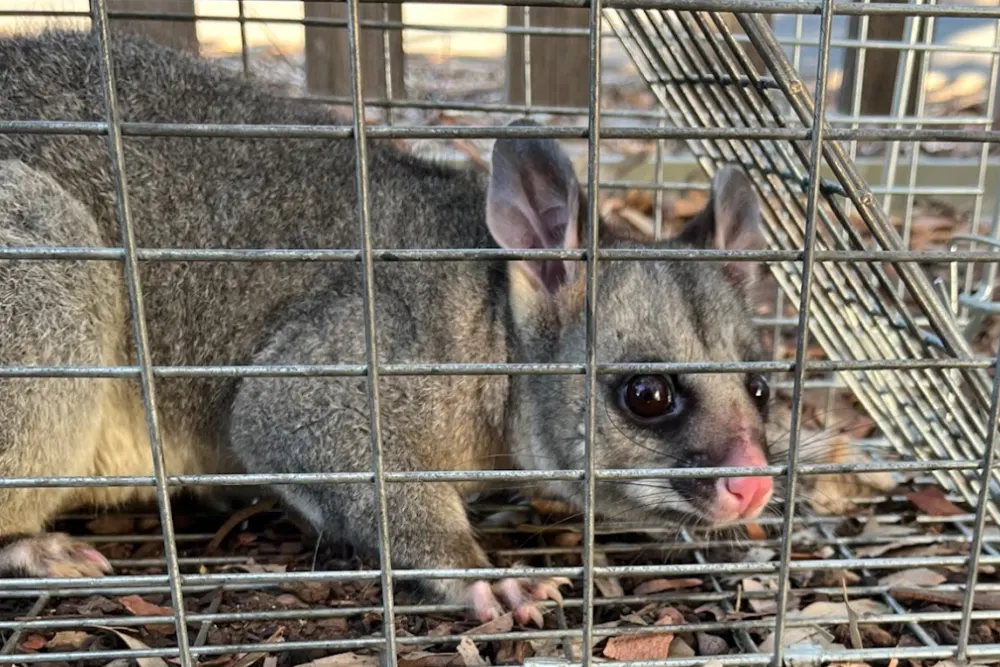
- Trapping is regulated. Capturing a possum generally requires either a licence or compliance with a specific published authority, and unlicensed trapping exposes you to penalties.
- Release is regulated. Even a legally trapped possum cannot be released wherever you like.
Penalties vary but are not trivial — fines running into thousands of dollars, and higher exposure again where cruelty is involved.
What the law is called in each state
Knowing the instrument matters, because it is what you quote when a contractor tells you something that sounds wrong.
New South Wales
Native animals are protected under the Biodiversity Conservation Act 2016 (NSW), administered by the NSW environment department. Licensed operators may trap and release possums subject to conditions, and the release distance is tightly limited — a possum must go back close to where it was caught, on the same night.
Queensland
The Nature Conservation Act 1992 (QLD) applies. Queensland's framework is well established for possums in buildings, and the department publishes guidance for homeowners. Damage-mitigation style permits and licensed removalists both exist within it, and release is again restricted to the immediate vicinity of the capture point.
Australian Capital Territory
The Nature Conservation Act 2014 (ACT) governs native wildlife in the territory. The ACT is small enough that "relocation" in any meaningful sense is not practical, and the emphasis falls on exclusion and proofing rather than removal.
Victoria
The Wildlife Act 1975 (VIC) applies, and Victoria has the strictest and clearest position of the four: a possum removed from a building must be released on the same property, generally within a very short distance of the capture site, on the same night. It cannot be taken to a park, a reserve, or bushland down the road.
That single rule explains why Victorian jobs are sealing-led. If the animal must be released on your property, then the only thing that changes the outcome is closing the way back in.
Why relocation is restricted
The rules look harsh until you understand the biology.
Brushtail possums are territorial. An adult male holds a home range with established den sites, feeding routes and escape trees, and defends it. Drop a stranger into that range and the resident drives it out. The newcomer has no den, no known food sources, no escape routes, and no knowledge of local predators.
Studies of relocated possums consistently find high mortality within weeks. Released animals die from starvation, from injuries sustained in territorial fights, from dogs and foxes, and from road strikes as they wander looking for shelter.
So a homeowner who traps a possum and drives it to the bush has not solved anything humanely. They have moved the problem into a slower death, and left the hole in their roof open for the next animal.
What you are allowed to do
The legal position is more permissive than most people assume once you focus on the building rather than the animal.
- You may seal your building. Proofing eaves, roof lines, vents and gaps is entirely legal and is the recommended long-term solution.
- You may use one-way exclusion devices. A door that lets the animal out but not back in avoids capture altogether, which is why licensed operators default to it.
- You may remove attractants. Securing bins, picking up fruit, moving pet food indoors and trimming access branches are all unregulated.
- You may install a nest box. Giving a displaced possum an alternative den on the property improves the outcome and reduces the chance it tries to re-enter.
The one thing to be careful about is timing. Sealing a roof while an animal is inside — or while dependent young are inside and the mother is out feeding — can constitute cruelty even though the sealing itself is legal. That is the single most common mistake we are called to correct, usually a fortnight later when the smell starts.
Choosing an operator: what to check
Because the licensing sits with the operator rather than the homeowner in most removal jobs, the question shifts to how you verify the person you hire.
- Ask which authority they hold and under which Act. A licensed operator will answer immediately and specifically.
- Ask what they do with the animal. The correct answer references release close to the capture point under state conditions — not "we take it out to the bush".
- Ask whether sealing is included in the quote. Removal without sealing is a repeat booking, not a fix.
- Ask for photographs of the work. Documentation is standard practice for anything that may go to an insurer or strata committee.
- Check insurance. Public liability matters when someone is working on your roof.
An operator who is vague about the legal framework is telling you something useful about how they work.
What about ringtails, and what about other species?
Ringtail possums are also protected, and are more often found in dense garden vegetation and drey nests than in roof cavities — though they certainly use roofs. The same rules apply.
If what you have is actually a rat, a mouse or an introduced species, none of this protection applies and the treatment is completely different. That is why species identification is the first step in any inspection: the legal obligations diverge immediately based on what is actually in the ceiling.
The practical summary
If you take three things from this:
1. Do not trap. It requires authorisation, and DIY relocation usually kills the animal.
2. Do seal. Proofing your building is legal, encouraged, and the only permanent solution.
3. Get the timing right. Sealing with an animal or young inside turns a wildlife problem into a carcass problem.
The legislation is not the obstacle people expect. It rules out the approaches that do not work anyway, and points directly at the one that does: close the entry point, and the roof stops being available.
What the penalties actually look like
Penalty units differ by jurisdiction and are updated regularly, so specific dollar figures date quickly. What is consistent is the structure of the exposure:
- Unlicensed taking or keeping of protected wildlife attracts a fine, and the fine scales with the number of animals involved.
- Cruelty offences sit under separate animal welfare legislation and carry substantially higher penalties, including the possibility of imprisonment in the most serious cases.
- Commercial operators face additional exposure — licence suspension or cancellation on top of any fine.
The realistic risk to a homeowner is not a raid. It is a neighbour who sees a cage trap and reports it, a council officer attending for another reason, or a strata dispute where somebody escalates. The exposure is real enough that it is not worth taking on to save the cost of one job.
Common myths, checked
"It is my property, so I can do what I like." Property rights do not extend to protected wildlife. The animal is protected regardless of whose roof it is in.
"I will just take it a few kilometres away." Distance is the problem, not the solution. Release conditions exist because animals moved outside their home range usually die. Victoria's on-property rule is explicit about this; other states restrict release distance for the same reason.
"I am allowed to defend my property from damage." There are damage-mitigation frameworks in some jurisdictions, but they are permit-based, specific, and do not amount to a general right to remove wildlife at will.
"A pest controller can do whatever they like." No. A pest control licence is not the same as a wildlife licence. Ask specifically which authority covers the wildlife handling, not just whether they are "licensed".
"If it is in my roof it is not really wild." It is. A possum using a building as a den site has exactly the same status as one in a tree.
What to do instead, in order
1. Identify the species. Possum, rat and mouse have entirely different legal and practical treatment. Get this right first.
2. Find every entry point. This is the part that determines whether the problem ends. Inspection should cover the whole roof line, not just the obvious gap.
3. Exclude, do not capture. A one-way door avoids the legal complexity of capture altogether, and it is less stressful for the animal.
4. Check for young before anything is sealed. This is both a welfare obligation and the difference between a clean job and a carcass in a fortnight.
5. Seal permanently with durable materials. Steel mesh, timber, flashing. Not chicken wire, not foam alone.
6. Offer an alternative den. A nest box on the property gives a displaced animal somewhere to go, which reduces the chance it works at your repair.
7. Document everything. Photographs and a written report, for insurance, strata or a future sale.
Where to check the current rules
Legislation and departmental guidance change. Before acting on anything you read online — including this page — check the source for your state:
- NSW — the state environment department publishes homeowner guidance on native animals in buildings, under the Biodiversity Conservation Act 2016.
- Queensland — the Queensland Government publishes a living-with-wildlife series covering possums specifically, under the Nature Conservation Act 1992.
- ACT — territory environment guidance sits under the Nature Conservation Act 2014.
- Victoria — the state environment department publishes possum-specific guidance, including the on-property release requirement, under the Wildlife Act 1975.
Every page on this site links to those departments in the sources block at the foot of the page. If a contractor tells you something that contradicts them, take the department's position.
The practical bottom line
The law rules out precisely the approaches that do not work anyway. Poison creates a carcass in your wall. Trapping and dumping kills the animal and leaves your roof open. Repellents move the problem four metres sideways.
What is legal is also what works: exclude the animal humanely, then close the building. The regulation is not standing between you and a solution — it is pointing at the only one that lasts.
Want it handled instead?
A licensed technician is on site within 60 minutes across Sydney, Brisbane, Canberra and Melbourne. Free inspection, fixed price, booking confirmed within 10 minutes.